
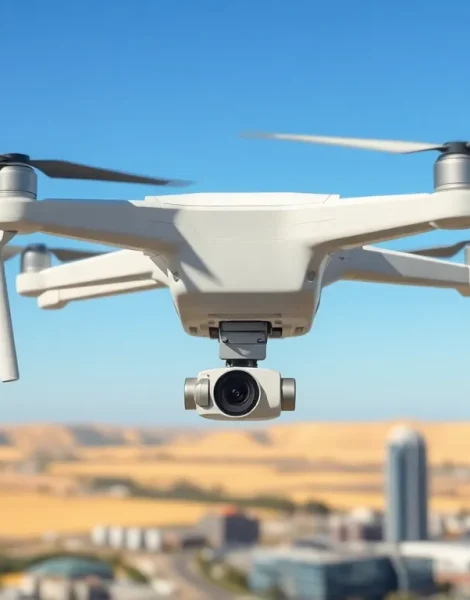
Drones examples span far beyond the buzzing quadcopters at your local park. These unmanned aerial vehicles (UAVs) now serve critical roles across agriculture, defense, logistics, and entertainment. The global drone market reached $30.6 billion in 2024 and continues to expand rapidly. From hobbyists capturing stunning aerial footage to farmers monitoring crop health, drones have become essential tools in modern life. This guide explores the most common types of drones and their real-world applications across multiple industries.
Table of Contents
ToggleKey Takeaways
- Drones examples span consumer, commercial, agricultural, military, and delivery sectors, with the global market reaching $30.6 billion in 2024.
- Consumer drones from brands like DJI offer 4K video, GPS navigation, and automated flight modes, making aerial photography accessible to beginners and professionals alike.
- Agricultural drones reduce chemical usage by up to 90% through precision spraying and detect crop health issues before they spread across entire fields.
- Commercial drones examples include construction surveying, infrastructure inspection, and search and rescue operations—tasks that previously required expensive equipment or put workers at risk.
- Medical delivery drones like Zipline have completed over 500,000 deliveries, transporting blood, vaccines, and medications to remote clinics within minutes.
- Delivery services from Amazon, Wing, and Walmart are expanding rapidly, though FAA regulations on visual line of sight remain a key challenge for widespread adoption.
Consumer Drones for Photography and Recreation
Consumer drones represent the most familiar drones examples for everyday users. These devices typically feature built-in cameras, GPS navigation, and user-friendly controls. Brands like DJI, Autel, and Parrot dominate this market segment.
Photography drones have transformed how people capture memories. Wedding photographers use them to get sweeping venue shots. Real estate agents showcase properties from stunning angles. Travel enthusiasts document their adventures from perspectives impossible to achieve on foot.
The DJI Mini series offers an excellent entry point for beginners. These compact drones weigh under 250 grams, which exempts them from certain FAA registration requirements in the United States. They deliver 4K video quality and can fly for up to 30 minutes on a single charge.
Recreational drone racing has also emerged as a competitive sport. First-person view (FPV) drones allow pilots to race through obstacle courses at speeds exceeding 90 miles per hour. The Drone Racing League hosts professional competitions broadcast on major sports networks.
Hobbyist drones typically cost between $300 and $2,000. Higher-end models include obstacle avoidance sensors, longer battery life, and professional-grade cameras. Many consumer drones now offer automated flight modes that make capturing cinematic footage surprisingly simple.
Commercial and Industrial Drone Applications
Commercial drones examples demonstrate the technology’s impact on business operations. These industrial-grade UAVs perform tasks that previously required expensive equipment or put workers at risk.
Construction companies use drones to survey job sites and track project progress. A single drone flight can map an entire construction site in minutes. This data helps project managers identify issues early and maintain accurate timelines.
Infrastructure inspection represents another major use case. Utility companies deploy drones to examine power lines, wind turbines, and cell towers. Traditional inspections required workers to climb dangerous heights or rent helicopters. Drones complete these inspections faster and safer.
The film and television industry relies heavily on drone cinematography. Productions that once needed expensive helicopter shots now achieve similar results with professional drones. Shows like “Game of Thrones” and “Westworld” featured extensive drone footage.
Search and rescue operations benefit from thermal imaging drones. These aircraft locate missing persons in remote areas by detecting body heat signatures. Emergency responders can cover vast wilderness areas much faster than ground teams.
Insurance adjusters use drones to assess property damage after natural disasters. Instead of climbing onto damaged roofs, adjusters capture detailed imagery from the air. This approach speeds up claims processing and reduces injury risks.
Agricultural Drones for Precision Farming
Agricultural drones examples showcase some of the most practical applications of UAV technology. Farmers worldwide use these tools to increase yields while reducing costs and environmental impact.
Crop monitoring drones equipped with multispectral cameras detect plant health issues invisible to the human eye. These sensors identify nutrient deficiencies, pest infestations, and water stress before problems spread across entire fields. Early detection saves farmers thousands of dollars in potential crop losses.
Precision spraying represents a game-changing application. Agricultural drones apply fertilizers, pesticides, and herbicides with remarkable accuracy. They target specific areas that need treatment rather than blanketing entire fields. This precision reduces chemical usage by up to 90% compared to traditional methods.
Livestock monitoring has become another valuable use case. Ranchers deploy drones to track cattle across large grazing areas. Thermal cameras help locate animals and identify those showing signs of illness through abnormal body temperatures.
Irrigation management improves significantly with drone data. Aerial surveys reveal dry spots and drainage issues across farmland. Farmers adjust irrigation systems based on actual field conditions rather than estimates.
The agricultural drone market is projected to reach $5.7 billion by 2025. Major manufacturers like DJI Agras and Yamaha produce specialized spraying drones capable of treating hundreds of acres daily. These drones examples prove that farming technology continues to advance rapidly.
Military and Defense Drone Systems
Military drones examples range from small reconnaissance units to large armed aircraft. Defense applications drove much of the early drone development, and military use remains a significant sector.
Reconnaissance drones gather intelligence without risking pilot lives. The RQ-4 Global Hawk can fly at 60,000 feet for over 30 hours while capturing detailed surveillance imagery. These high-altitude drones monitor enemy movements and map terrain across vast regions.
Armed drones like the MQ-9 Reaper conduct precision strikes in combat zones. These aircraft carry missiles and guided bombs while being controlled by operators thousands of miles away. The ethical implications of armed drones continue to spark debate among policymakers and citizens.
Smaller tactical drones serve ground troops directly. The Black Hornet weighs just 33 grams and fits in a soldier’s pocket. Troops deploy these tiny drones to scout around corners and over walls during urban operations.
Counter-drone systems have emerged as a response to UAV threats. Military installations use jamming equipment, nets, and even trained eagles to neutralize unauthorized drones. These defensive measures protect sensitive locations from surveillance and potential attacks.
Naval forces employ drones for maritime patrol and submarine detection. The MQ-4C Triton monitors ocean surfaces and can identify vessels across thousands of square miles. Drone technology gives navies persistent surveillance capabilities previously impossible to maintain.
Delivery and Logistics Drones
Delivery drones examples point toward the future of last-mile logistics. Companies like Amazon, Wing (Alphabet), and Zipline are deploying UAVs to transport packages directly to customers.
Amazon Prime Air has conducted thousands of drone deliveries since launching its service. These drones carry packages weighing up to five pounds and complete deliveries within 60 minutes of ordering. The service currently operates in select Texas and Arizona locations.
Medical supply delivery showcases drones’ life-saving potential. Zipline operates the world’s largest drone delivery network in Rwanda and Ghana. Their aircraft deliver blood, vaccines, and medications to remote clinics within minutes. This service has completed over 500,000 commercial deliveries.
Wing, owned by Google’s parent company Alphabet, delivers food and retail items in several U.S. cities. Their drones lower packages on tethers rather than landing, which speeds up delivery times and reduces noise.
Walmart has partnered with DroneUp to offer drone delivery from hundreds of store locations. Customers within a certain radius can receive items ranging from groceries to household goods via drone.
Regulatory challenges remain the biggest obstacle to widespread drone delivery. The FAA requires operators to maintain visual line of sight with their aircraft in most cases. But, beyond-visual-line-of-sight (BVLOS) waivers are becoming more common as safety records improve.
Urban air mobility concepts extend the delivery drone vision further. Companies are developing larger drones capable of transporting people. These air taxi services could transform urban transportation within the next decade.


